Crypto Taxes and On-Chain Activity: A Practical Record-Keeping Workflow for DeFi, Staking, and Airdrops
Most crypto tax problems start long before filing season. They begin when records get scattered across wallets, exchanges, bridges, L2s, and DeFi apps.
That is what makes year-end cleanup expensive. Missing cost basis can overstate gains. Unlabeled self-transfers can look like taxable sales. Incomplete reward histories can leave staking or airdrop income unclear. And if too much time passes, you may not remember what a transaction was for.
The good news is that this is usually a record-keeping problem more than a tax-rule problem. If you preserve transaction history, wallet ownership, and supporting evidence throughout the year, tax reporting becomes much easier.
This guide lays out a practical system for doing that. It covers wallet labeling, transaction tracking, monthly exports, and reconciliation across DeFi, staking, airdrops, bridges, and L2s. Tax treatment varies by country, and some edge cases are still unsettled, so use this as an operational framework and confirm final treatment with a qualified professional.[^1]
Why on-chain tax records break down
A block explorer can show that something happened. It usually cannot tell you why it happened.
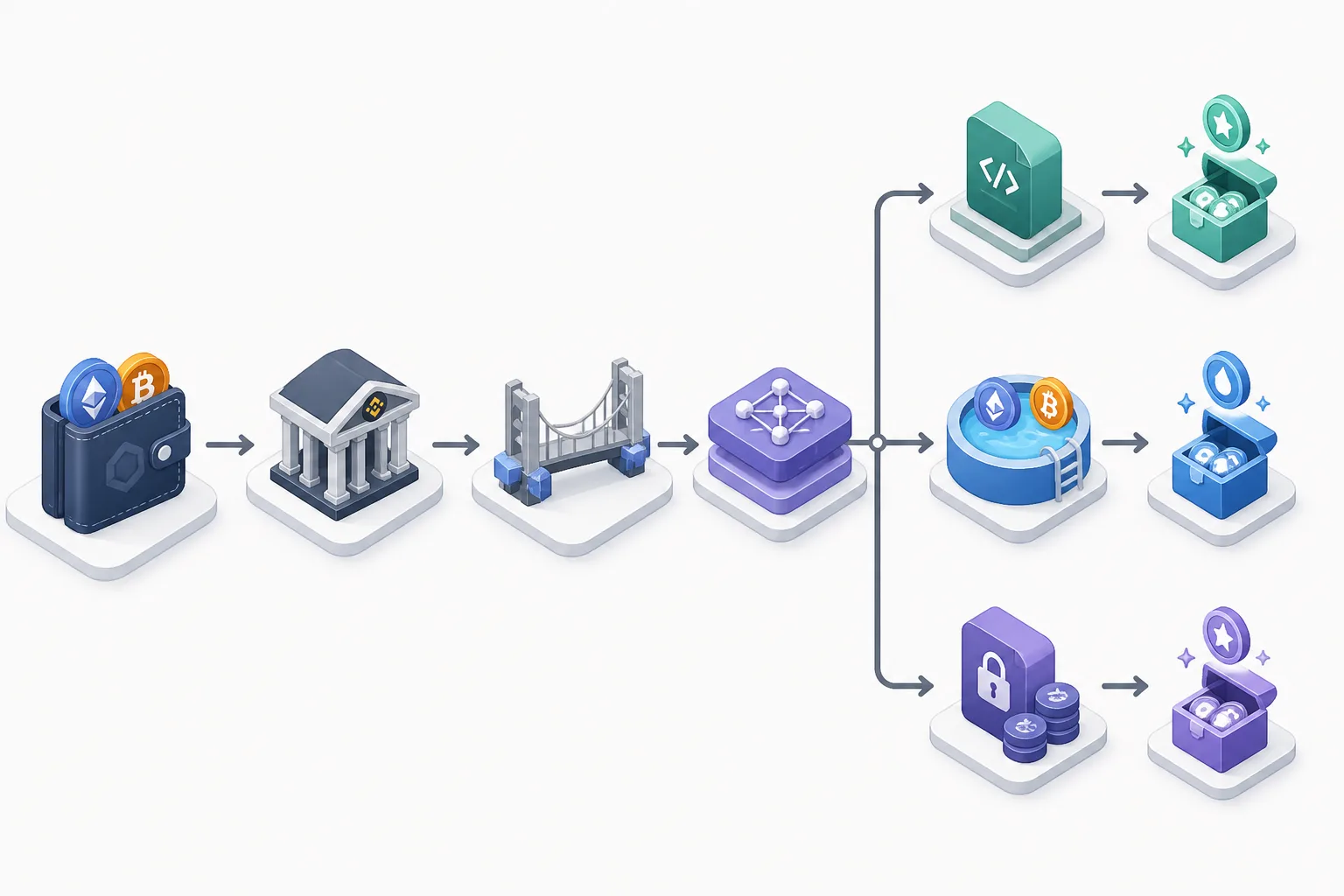
That missing context matters. A swap may route through several contracts. A bridge may burn an asset on one chain and mint a wrapped version on another. An LP deposit may convert two assets into an LP token or position NFT. A staking dashboard may show your current balance without preserving the reward history you need later.
The core problem is simple: one economic action often appears as several technical events.
Imagine this sequence:
- buy ETH on a centralized exchange
- withdraw it to Ethereum
- bridge part of it to Arbitrum
- swap into USDC and ARB
- deposit ETH and USDC into a liquidity pool
- claim rewards later
- unstake a different asset on Ethereum
- receive an airdrop tied to past activity
If those steps are not linked, software may treat a bridge as a sale, an LP withdrawal as unexplained income, or an airdrop as a zero-context deposit.
A repeatable workflow helps you avoid three common failures:
- Broken cost basis
- False taxable events from self-transfers
- Last-minute reconstruction during filing season
The key idea is to start with transaction history, not the tax form.
Use the right mental model: taxes are downstream of records
If your ledger is wrong, your tax output will be wrong, no matter how good the software is.
For on-chain activity, tax reporting depends on reconstructing:
- where assets came from
- where they went
- whether ownership changed
To do that well, you need timestamps, wallet ownership, cost basis, fair market value references where needed, and evidence linking both sides of a transfer.
The three-layer record system
A simple way to stay organized is to keep records in three layers.
1. Wallet and account inventory
This is the master list of everything you control or use:
- self-custody wallets
- exchange accounts
- custodial apps
- smart contract wallets
- multisigs
- one-off wallets used for airdrops, testnets, or bridge activity
2. Transaction ledger
This is your working record. Useful columns include:
- review status
- wallet label
- owner
- chain
- tx hash
- block time
- protocol or app
- counterparty or contract
- event label
- asset out / amount out
- asset in / amount in
- fee token / fee amount
- FMV source
- source file
- linked transfer ID
- notes
- final treatment
3. Supporting evidence archive
This is where you keep the raw proof behind the ledger:
- exchange CSVs
- wallet exports
- protocol reward reports
- bridge receipts
- screenshots
- explorer links
- price references
Waiting until year-end usually fails for predictable reasons. People forget old wallets, lose LP entry data, cannot match bridge legs, or no longer remember what a transaction meant. The fix is to preserve intent while the details are still fresh.
Step 1: Build a wallet and account inventory first
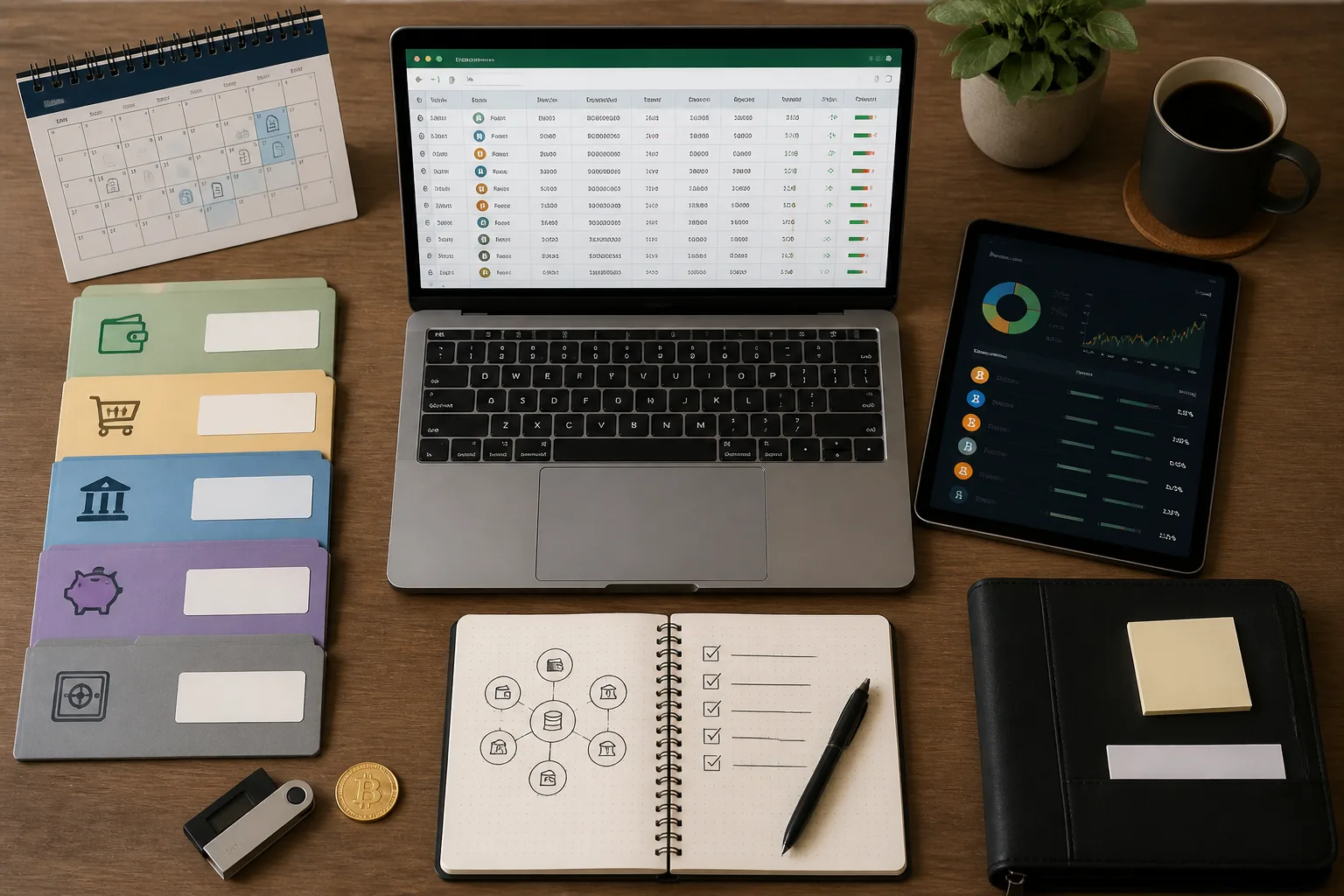
This is the highest-leverage setup step. If your wallet list is incomplete, your ledger will be incomplete too.
Create a master wallet list
At minimum, include:
- wallet label or name
- address or account ID
- blockchain or network
- wallet type
- owner
- purpose
- date first used
- linked exchange accounts
- software import status
- notes
Label wallets by function
Function labels help you reconstruct intent later. Arbitrum-Farming-01 is much easier to understand than a raw address.
Useful categories include:
- trading
- long-term holding
- staking
- farming
- governance
- airdrop eligibility
- testing or testnet
- bridge-only
- payroll or income
- burner wallet
Include off-chain accounts too
Many missing-basis problems begin off-chain. If you bought ETH on an exchange and later moved it on-chain, the exchange CSV may be your only clean record of original acquisition cost.
Before you review any transactions, make sure your inventory includes old and low-activity accounts as well.
Step 2: Track different transaction types differently
Not every on-chain action should be recorded the same way.
Swaps
For each swap, record:
- chain
- protocol
- timestamp, ideally in UTC
- tx hash
- asset disposed
- amount disposed
- asset acquired
- amount acquired
- fee token
- fee amount
- FMV source if needed
This matters because wallet interfaces often hide routed execution, wrapped assets, or aggregator steps.
For example, if you swap ETH for USDC on Arbitrum, your ledger should show the ETH disposal, the USDC acquisition, and the gas fee separately. That makes gain or loss analysis much cleaner later.
LP positions
Capture:
- deposit date and time
- pool and protocol
- both assets deposited
- amounts deposited
- LP token received or position NFT minted
- reward claims
- auto-compounding behavior
- final withdrawal amounts
LP positions are hard to reconstruct because dashboards often show current state, not full history. If you miss the original deposit record, later withdrawals become much harder to classify.
Staking
Separate:
- principal sent into staking
- principal returned
- rewards distributed or claimed
If you unstake 10 tokens and receive 10.4 back, those records should not be treated as one undifferentiated inflow. Operationally, 10 is principal movement and 0.4 may be a reward, depending on the facts and local rules.
Airdrops
Save:
- the eligible wallet
- claim date or receipt date
- amount received
- FMV reference used
- proof of claim or distribution
- any vesting or governance condition
This matters because treatment can vary by jurisdiction and by facts such as control, claimability, or unsolicited receipt.[^2]
Bridges and L2 transfers

Always record both sides:
- origin chain tx hash
- destination chain tx hash
- bridge used
- asset sent
- asset received
- amount difference
- fee
- timing gap
- note on wrapped vs. canonical asset
If you bridge ETH from Ethereum to Arbitrum and fail to link both legs, software may create a phantom disposal on Ethereum and a zero-basis deposit on Arbitrum.
Set these rules early, before transaction volume grows.
A labeling framework you can actually use
Good records depend on consistent labels, not memory.
The LABEL method
Use this workflow for every meaningful transaction:
Link
Connect the transaction to wallet ownership and any related transfer.
Assign
Choose the likely event type: swap, self-transfer, LP deposit, reward, airdrop, and so on.
Bucket
Group it into a practical category such as transfer, disposal, income, fee, or spam.
Explain
Add a short note and attach evidence.
Lock
Once reconciled, keep the classification stable unless new evidence appears.
Useful transaction tags
- self-transfer
- bridge transfer
- L2 funding
- taxable disposal
- acquisition
- staking principal
- staking reward
- LP deposit
- LP withdrawal
- LP reward
- airdrop
- wrap or unwrap
- migration
- approval-only
- failed transaction
- spam token
- dust
- unknown-investigate
If a transaction is unclear, do not delete it. Mark it as provisional, attach the explorer link, note the suspected protocol, and review it during your next monthly check.
Example
Before labeling:
- random tx hashes
- unexplained token inflows
- no transfer links
- no saved bridge receipts
After labeling:
ETH-Main-Stakingwallet for validator activityARB-Farmingwallet for LP and reward activityBASE-Bridge-Tempwallet for bridge-only use- bridge deposit and receipt matched with one linked transfer ID
- reward claims tagged as
LP reward - airdrop tagged with receipt evidence and FMV source
Labels preserve context that explorers and dashboards usually do not.
Step 3: Export data on a schedule
The best time to save records is before a dashboard changes or disappears.
Monthly vs. quarterly
A simple rule works well:
- Monthly if you actively use DeFi, multiple wallets, or several chains
- Quarterly if activity is light and limited
Monthly review is not about perfection. It is about preventing data loss and preserving memory.
What to export
Export regularly:
- exchange trade history
- exchange deposits and withdrawals
- wallet transaction exports, if available
- protocol reward histories
- LP and staking dashboard records
- bridge receipts
- price references for hard-to-value assets
How to store files
A simple folder structure is enough:
/Tax-Year/01-Wallet-Inventory/02-Exchange-CSVs/03-On-Chain-Exports-by-Chain/04-Protocol-Reports/05-Bridge-Records/06-Price-References/07-Reconciliation-Notes/08-Final-Reports
Use file names you can understand later, such as:
2026-03-31_binance_account1_trade-history.csv
Do not rely on memory or live dashboards. Save source records as you go.
Step 4: Reconcile chain by chain, then wallet by wallet
Reconciliation is the step that turns raw activity into tax-ready records.
A simple reconciliation workflow
Use this order:
- Review one chain at a time
- List inflows and outflows by wallet
- Match internal transfers between owned accounts
- Isolate swaps, rewards, and other external events
- Tag unmatched items for investigation
A useful set of questions:
- Where did this asset come from?
- Where did it go?
- Did ownership change?
- Was value realized or merely moved?
- What evidence supports that view?
How cost basis gets broken
Continuity usually breaks in a few familiar ways:
- an asset appears on the destination chain with no linked source
- a wrapped token looks like a new acquisition
- a migration replaces one token or LP format with another and prior history gets lost
This is why a linked transfer ID matters. It lets you pair the Ethereum bridge-out with the Arbitrum bridge-in, even when the transaction patterns look different.
If your sources disagree
Use a source hierarchy:
- Chain explorer for existence and timestamps
- Protocol dashboard or docs for event context
- Exchange CSVs for off-chain legs
- Market data source for FMV
- Tax software as a working classification layer, not the final authority
Explorers like Etherscan, Arbiscan, and Basescan are often the best starting point for raw verification.[^3]
Reconcile in small batches. Trust source evidence over convenience.
Common failure points
A few patterns create most year-end cleanup pain.
Unlabeled self-transfers
If you move assets between your own wallets and do not link both sides, software may create phantom gains or income.
Missing LP entry data
This is common with older DeFi positions. A current dashboard balance is not enough if you need the full historical path.
Incomplete staking reward history
If you only capture current balances, you may lose the record of when rewards were distributed or claimable.
Ignoring gas fees or treating all fees the same
Fee treatment varies, but your records should still capture:
- fee asset
- amount
- chain
- linked transaction context
A failed swap and a successful acquisition do not tell the same story.
Relying on a single dashboard
Dashboards change. APIs break. Old reward views disappear.
Forgetting low-use wallets
Wallets used only for airdrops, testnets, or one-off bridge activity often contain the missing link that explains a later receipt.
Most tax chaos is predictable. Build around these failure points before they become cleanup problems.
A monthly checklist
Use this checklist to stay organized:
- Update your wallet and account inventory
- Add any new chains, L2s, or wallets
- Export exchange trades and transfer CSVs
- Export protocol reward and LP history
- Save bridge receipts and explorer links
- Label new transactions with the LABEL method
- Match self-transfers and bridge legs
- Review unknown, failed, spam, and dust transactions
- Archive price references for thinly traded tokens
- Log unresolved issues for later review or accountant escalation
Before quarter-end, also review:
- unresolved unknowns
- missing cost basis
- inactive protocols that may remove old data
- large dispositions that need extra documentation
Before filing season, review:
- full-year wallet completeness
- transfer matching across chains
- final treatment for wraps, migrations, LPs, and airdrops
- whether DIY cleanup is still realistic
When to bring in a professional
Sometimes the best workflow decision is knowing when to escalate.
Signs DIY cleanup may not be enough
Consider professional help if you have:
- very high transaction volume
- heavy bridge and L2 use
- complex LP histories
- missing wallet records
- smart contract wallet or multisig activity
- prior-year errors
- business or DAO activity
- unresolved wraps, migrations, or airdrop edge cases
Why better records still matter
Good records do not just help you. They help your accountant spend time reviewing judgment calls instead of rebuilding your history from scratch.
That usually means:
- lower cleanup cost
- lower filing risk
- fewer amendments later
If the problem is reconstruction, it is usually better to get expert help before filing, not after a notice arrives.
Conclusion
The hardest part of crypto tax reporting is usually not the form itself. It is preserving the evidence behind your activity.
A workable approach is operational: build a wallet inventory first, classify transactions by type, export source records monthly, and reconcile chain by chain. Use labels that preserve intent while the details are still fresh.
Do that consistently, and swaps stay traceable, LP positions stay reconstructable, staking records stay separated, and bridges stop breaking cost basis. The result is simpler filing, better records, and much less year-end chaos.
FAQ
Why does on-chain activity become so hard to report at year-end?
Usually because records break before filing begins. Activity gets split across wallets, exchanges, bridges, L2s, and protocols, which makes it harder to reconstruct ownership, timestamps, cost basis, and income events later.
What records should I keep for DeFi tax reporting?
Keep three layers: a wallet and account inventory, a transaction ledger, and a supporting evidence archive. Your ledger should include wallet label, chain, tx hash, date and time, assets in and out, amounts, fees, protocol, event type, source file, and notes.
How should I track swaps?
For each swap, capture the chain, protocol, timestamp, transaction hash, asset disposed, amount disposed, asset acquired, amount acquired, and fees paid. This preserves disposal details and cost basis even when the route is complex.
Why are LP positions difficult to reconstruct later?
Because they often involve several moving parts: deposits, LP tokens or position NFTs, reward claims, auto-compounding, and withdrawals. Many dashboards show the current state without preserving the full historical record.
How do I separate staking principal from staking rewards?
Treat the original staked amount and the rewards as different record types. Record the staking date, protocol or validator, principal amount, reward token, reward amount, and the date rewards were distributed or claimed.
What should I save for airdrops?
Save the eligible wallet, the claim or receipt date, the amount received, an FMV reference, and any proof of claim or distribution. That matters because treatment can vary by jurisdiction and by the facts of how the tokens were received.
How do bridges and L2 transfers affect cost basis?
They can break continuity if software fails to recognize them as same-owner transfers. Record both the origin and destination transaction hashes, the bridge used, the asset sent, the asset received, fees, and any wrapped or canonical token differences.
How often should I export records?
Monthly is the best default for active DeFi users. Quarterly may be enough if your activity is low-volume and limited to a small number of wallets and chains. Regular exports reduce the risk of missing data and help preserve context.
What if explorers, dashboards, and tax software disagree?
Use a source hierarchy. Start with the chain explorer for transaction existence and timestamps, use protocol dashboards and docs for context, use exchange CSVs for off-chain legs, and treat tax software as a working layer rather than your only source of truth.
When should I hire a crypto tax professional?
Consider it if you have high transaction volume, use multiple L2s and bridges, cannot reconcile self-transfers, lost historical records, or have edge cases involving LPs, wraps, migrations, business activity, or prior-year amendments.